
Choosing Between Scaffold Shade Cloth and Scaffold Netting for Weather Protection
When it comes to construction sites, ensuring the safety and comfort of workers is paramount. One of the key elements in achieving this is the choice of scaffold coverings. Scaffold shade cloth and scaffold netting are two popular options, each offering distinct advantages and disadvantages. Understanding these differences can help you make an informed decision that best suits your project’s needs.
Understanding Scaffold Shade Cloth
Scaffold shade cloth is designed primarily to provide shade and reduce heat on construction sites. Made from woven fabric, it allows air to flow while blocking harmful UV rays. This is particularly beneficial in hot climates, where excessive sun exposure can lead to heat stress among workers.
Benefits of Scaffold Shade Cloth
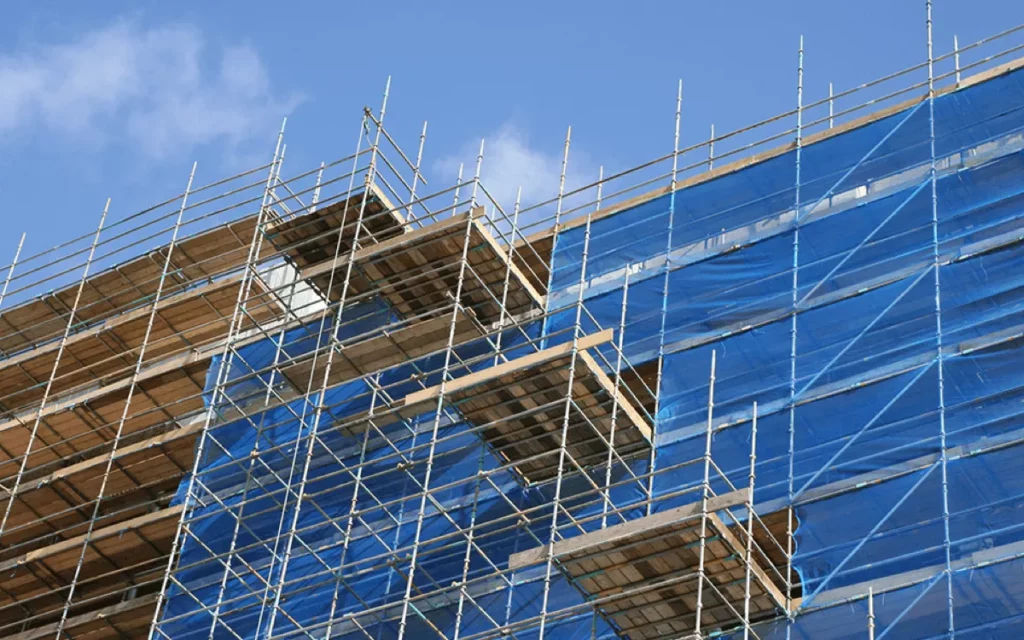
One of the standout features of scaffold shade cloth is its UV resistance. According to research, UV-resistant scaffold mesh can maintain its integrity for 2-3 years under continuous sun exposure, significantly reducing the frequency of replacements by 60-70% (Covert Procurement). This durability not only saves costs but also ensures that your site remains compliant with safety regulations.
Additionally, scaffold shade cloth can provide a shade rate of approximately 60%, which is crucial for protecting workers from sunburn and heat-related illnesses. This is particularly relevant for projects scheduled during the hotter months, where the risk of heat stress is elevated.
Applications of Scaffold Shade Cloth
Scaffold shade cloth is ideal for various construction projects, especially those involving outdoor work. It is commonly used in residential and commercial construction, landscaping, and even events where temporary structures are erected. The versatility of shade cloth makes it a go-to choice for many contractors looking to enhance worker comfort.
Moreover, it can also serve aesthetic purposes, as it comes in various colours and designs, allowing for a more visually appealing construction site. This can be particularly beneficial for projects in urban areas where appearance matters.
The Role of Scaffold Netting
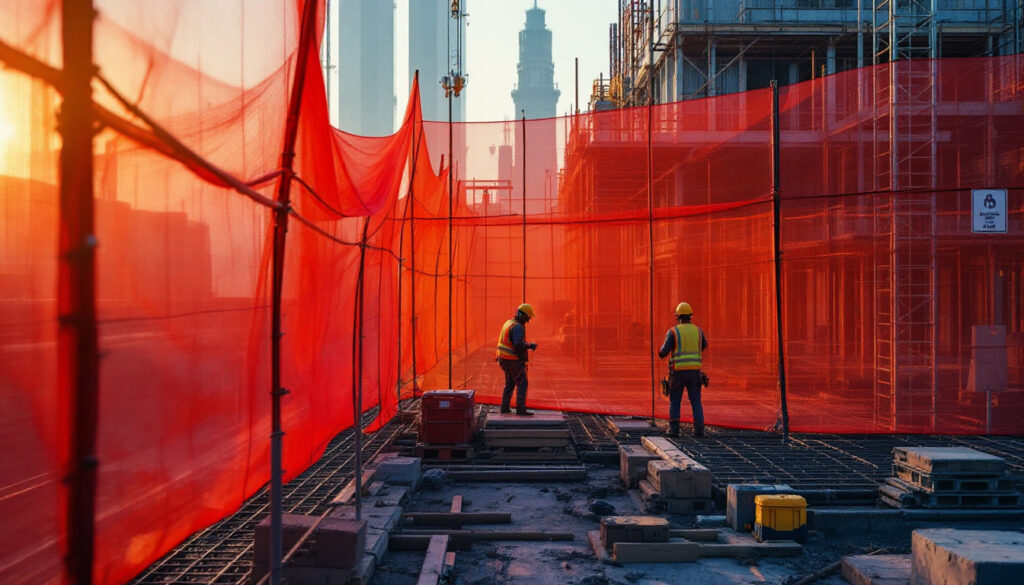
Scaffold netting, on the other hand, is primarily designed to enhance safety on construction sites. Made from a more robust material, it is intended to catch falling debris and prevent accidents. This is crucial in reducing the risk of injuries caused by falling objects, which account for 21% of non-fatal construction injuries, as highlighted by a 2022 study by the Construction Industry Research and Information Association (CIRIA) (Blue Ocean Plastic).
Advantages of Scaffold Netting
One of the primary advantages of scaffold netting is its ability to mitigate hazards. It can reduce construction risks by up to 70%, providing a safer working environment for everyone on site (Blue Ocean Plastic). This is particularly important in high-rise construction, where the potential for falling tools and materials is significantly increased.
Scaffold netting also offers a degree of weather protection, although it is not as effective as shade cloth in blocking UV rays. With a density of approximately 215 g/m², scaffold netting provides a shade rate of around 60%, which can help protect workers from sun exposure while still allowing for adequate airflow (Scaffold Pole).
Applications of Scaffold Netting
Scaffold netting is widely used in various construction projects, particularly those involving high-rise buildings, bridges, and other structures where the risk of falling debris is heightened. It is also beneficial in renovation projects where existing structures may pose additional hazards.
In addition to construction, scaffold netting is often employed in events and festivals, providing safety and security in crowded areas. Its ability to contain debris and protect attendees makes it a popular choice for event planners.
Comparing the Two: When to Use Each
Choosing between scaffold shade cloth and scaffold netting ultimately depends on the specific needs of your project. If your primary concern is worker comfort and protection from the sun, scaffold shade cloth is the better option. Its UV resistance and ability to provide shade can significantly enhance working conditions, especially in hot climates.
Conversely, if safety is your main priority, scaffold netting should be your go-to choice. Its robust design helps prevent accidents caused by falling objects, making it essential for high-risk construction sites. In many cases, a combination of both may be the best solution, providing comprehensive protection against both weather and safety hazards.
Cost Considerations
When evaluating the costs associated with scaffold shade cloth and netting, it is essential to consider not only the initial purchase price but also the long-term benefits. While scaffold shade cloth may have a higher upfront cost, its durability and reduced replacement frequency can lead to significant savings over time. As mentioned earlier, UV-resistant scaffold mesh can last for 2-3 years, which is a considerable advantage for budget-conscious contractors.
On the other hand, scaffold netting, while generally more affordable, may require more frequent replacements, especially in harsh weather conditions. Understanding the specific environmental factors at your construction site can help you make a more informed decision regarding your budget.
Training and Safety Protocols
Regardless of which option you choose, proper training and education for employees on working safely with scaffolding is crucial. John Smith, a Safety Manager at ABC Construction, emphasises the importance of training: "Proper training and education for employees on working safely on scaffolding in winter conditions is essential to mitigate risks and ensure adherence to safety protocols" (Scaffold Type).
Implementing safety protocols and ensuring that all workers understand the risks associated with scaffold use can significantly reduce the likelihood of accidents. Regular safety meetings and refresher courses can help keep safety at the forefront of your construction operations.
Conclusion
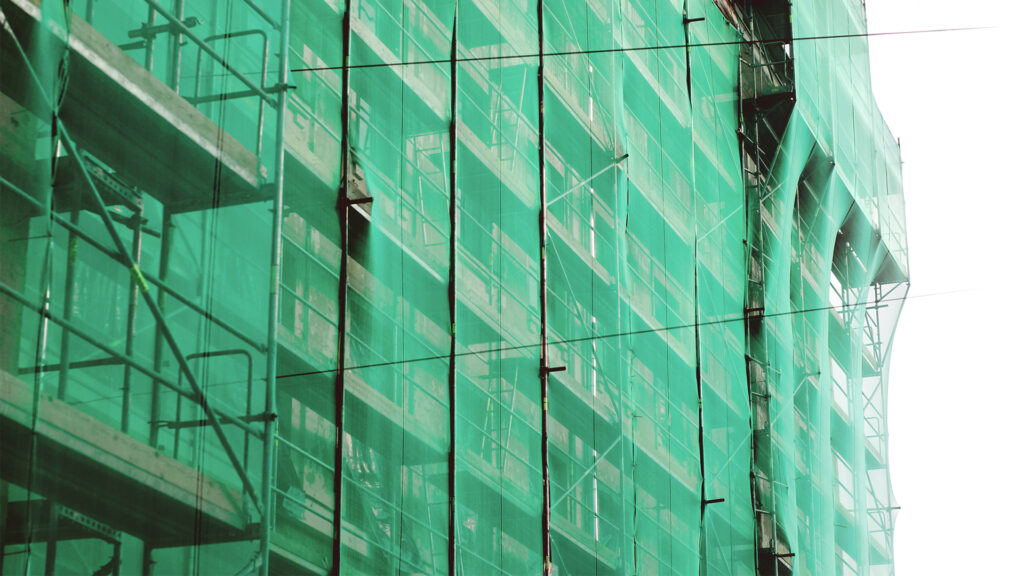
Choosing between scaffold shade cloth and scaffold netting is not a decision to be taken lightly. Both options offer unique benefits that cater to different aspects of construction safety and worker comfort. By understanding the specific needs of your project, considering cost implications, and prioritising safety training, you can create a safer and more efficient working environment.
Ultimately, the right choice will depend on the specific conditions of your construction site, the nature of the work being performed, and the overall goals of your project. Whether you opt for shade cloth, netting, or a combination of both, ensuring the safety and comfort of your workers should always be your top priority.
Click here: A Complete Guide to Site Mesh Regulations and Installation Standards in Australia
{
"@context": "https://schema.org",
"@type": "BlogPosting",
"mainEntityOfPage": {
"@type": "WebPage",
"@id": "https://hotrealtyinc.com/choosing-between-scaffold-shade-cloth-and-scaffold-netting-for-weather-protection/"
},
"headline": "Choosing Between Scaffold Shade Cloth and Scaffold Netting for Weather Protection",
"image": [
"https://hotrealtyinc.com/wp-content/uploads/2025/11/Content_Debris-Netting-1024x576-1.jpg",
"https://hotrealtyinc.com/wp-content/uploads/2025/11/bianzu-16beifen-1024x640-1.webp",
"https://hotrealtyinc.com/wp-content/uploads/2025/11/1.jpg"
],
"author": {
"@type": "Person",
"name": "Patrick Lackey",
"url": "https://hotrealtyinc.com/author/admin/"
},
"publisher": {
"@type": "Organization",
"name": "Hot Realty Australia",
"logo": {
"@type": "ImageObject",
"url": "https://hotrealtyinc.com/wp-content/uploads/2022/12/HAMZA-YT-2-Edited.png"
}
},
"datePublished": ""
}