Gym Cleaning Services vs In-House Cleaning: Which Prevents Bacteria Build-Up?
But gyms also have the other thing. Warmth, moisture, shared touch points, and a whole lot of people rotating through the same spaces all day. Which is basically the perfect setup for bacteria to hang around and multiply.
So when a gym owner or manager is choosing between professional gym cleaning services and an in-house cleaning setup, the real question is not just cost or convenience. It is whether their cleaning system actually prevents bacteria build-up, consistently, over time. Not just when someone remembers to do it.
What Makes Gyms So Prone to Bacteria Build-Up?
Gyms are not dirty by default. They just have conditions that bacteria love.
Gyms contain countless areas where germs and bacteria can accumulate, including shared equipment handles, damp towels, changing rooms, and communal facilities. Maintaining cleanliness across these spaces is essential for member confidence and wellbeing. Learn more about gym cleaning services at: https://matthewscleaningco.com.au/service/gym-cleaning-sydney/
And it is not only bacteria. There can be fungus too, like what causes athlete’s foot. Viruses can spread through touch points as well, especially when wipe downs are rushed or skipped.
A gym can look clean and still be carrying a problem. That is what makes bacteria build-up tricky. It is invisible until it becomes obvious, someone gets sick, complaints roll in, or there is that smell that will not go away.
How Does In-House Cleaning Usually Work in Real Gyms?
In-house cleaning usually means staff members handle cleaning duties, either full time janitorial hires or a mix of front desk staff, trainers, and managers doing it in between tasks.
On paper, it sounds fine. They know the facility, they are already there, and it feels like they can respond quickly.
But the weak spot is consistency.
In a real gym, staff get pulled in ten directions. A member needs help. A class starts. A machine breaks. Someone calls in sick. Then cleaning becomes the thing that gets shortened. Or delayed. Or done fast enough to check the box.
Also, in-house teams often rely on basic supplies and general routines. They may not have commercial grade disinfectants, proper dwell time practices, or structured checklists that cover the less obvious germ zones.
When in-house cleaning works, it is usually because management is strict, training is solid, and someone owns the process. When it fails, it is because it becomes everyone’s job, which turns into nobody’s job.
What Do Professional Gym Cleaning Services Do Differently?
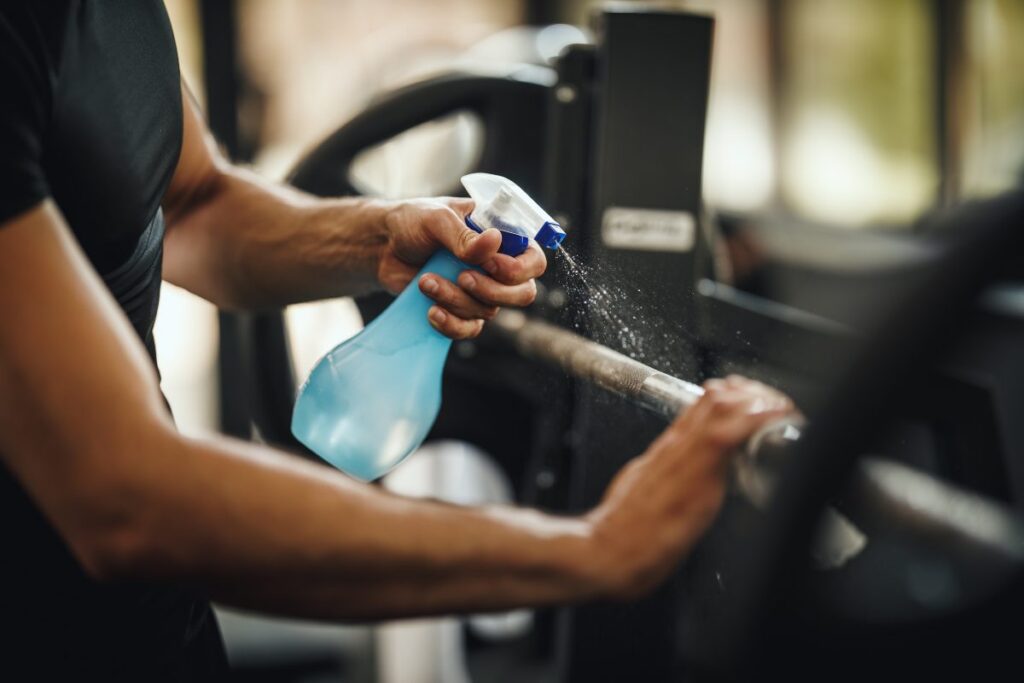
Professional gym cleaning services are built around repeatable systems. That is the main difference.
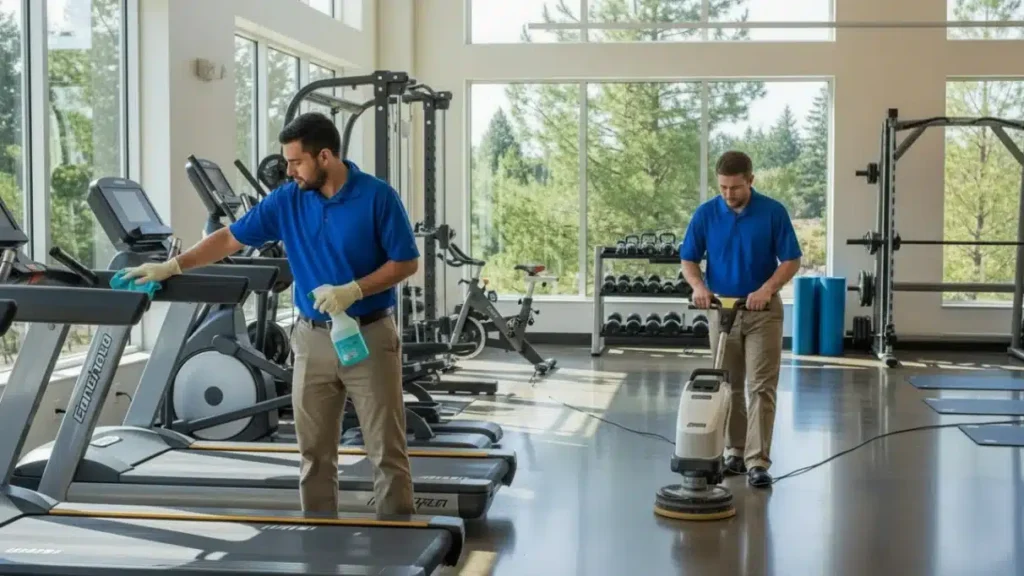
Their crews are trained specifically to clean, not to split cleaning between five other responsibilities. They typically bring commercial equipment, professional disinfectants, and routines that are designed to reduce bacteria load on surfaces, not just make things look tidy.
They also tend to clean differently. More detail work. More attention to high touch points. Better coverage in locker rooms and restrooms. And usually, some form of checklist based accountability.
A good cleaning company will also know that disinfection is not the same as wiping. Disinfectants need contact time. Some surfaces need different chemicals. Some areas should not be cleaned with the same tools used elsewhere. Cross-contamination is real in gyms.
And honestly, the biggest advantage is that their work is scheduled and expected. It happens even when the gym is busy, understaffed, or distracted.
Which Option Actually Prevents Bacteria Build-Up Better?
If the goal is strictly bacteria prevention, professional gym cleaning services usually win. Not because in-house teams cannot do it, but because they rarely do it at the same level, every day, long term.
Bacteria build-up is a cumulative problem. If they miss small areas repeatedly, like the underside of benches, dumbbell handles, treadmill buttons, foam rollers, locker handles, shower edges, it adds up. Then those spots become reservoirs.
Professional crews are more likely to:
- Follow the same routine every visit
- Hit the overlooked surfaces
- Use stronger, correct products
- Reduce cross-contamination through tools and process
- Clean deeper, not just faster
That said, an in-house system can prevent bacteria build-up if it is handled like a formal operational process. Training, documented procedures, audits, and time allocation are required. Most gyms do not structure this effectively. Click here for gym sanitation and compliance systems to review operational standards and hygiene protocols.
So the realistic answer is: professional services prevent bacteria build-up better in most gyms, because they are designed for consistency.
What Are the Hidden Failure Points That Create Bacteria Hotspots?
This is where gyms get surprised. The obvious spots get cleaned. The hotspots do not.
Some common failure points:
- Wipes that are too dry, used too quickly, or not replaced often enough
- Spray and wipe routines with no dwell time
- Towels reused across zones, especially from restroom to gym floor
- Mop water that gets dirty and just spreads contamination
- Focus on mirrors and floors while ignoring touch points
- Cleaning schedules that skip weekends or late hours
- “Looks clean” inspections instead of process based checks
A gym can spend hours cleaning and still leave bacteria behind if the process is not right.
What Is the Best Setup for Most Gyms?
Most gyms end up doing best with a hybrid approach.
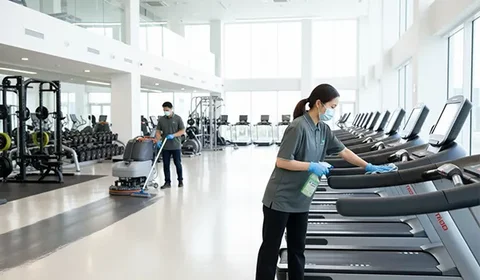
They can use professional gym cleaning services for deep cleaning and high risk zones, typically locker rooms, showers, restrooms, floors, and full equipment wipe downs on a schedule. Then in-house staff handle rapid response cleaning during the day, like spills, visible mess, and quick touch point resets.
This setup tends to work because it matches reality. Members create mess all day. Staff can handle the immediate stuff. Professionals handle the systematic stuff that prevents bacteria build-up from becoming a steady background problem.
If they go hybrid, the gym should still set standards. Clear checklists. Who does what. What products are used. And what “clean” actually means.
How Should They Decide Between In-House Cleaning and Hiring a Service?
They should decide based on risk and consistency, not just budget.
A gym should lean toward professional cleaning services if:
- They have locker rooms and showers
- Their foot traffic is high
- Staff turnover is frequent
- Members have complained about cleanliness or odors
- They want a consistent routine that does not depend on staff bandwidth
They should lean toward in-house cleaning if:
- The facility is small and simple
- They have reliable staff dedicated to cleaning
- They can train properly and enforce routines
- They can afford the time it takes to do it right
Either way, bacteria prevention depends on consistency, correct products, and cleaning the spots people forget.
For compliance-driven protocols, learn more about clinical cleaning standards medical environments.
Because bacteria does not care if the gym is “mostly clean.” It builds up in the gaps.
FAQs (Frequently Asked Questions)
Why are gyms particularly prone to bacteria build-up?
Gyms provide ideal conditions for bacteria growth due to warmth, moisture, sweat, skin contact, shared equipment handles, damp towels, locker rooms, showers, and high-touch surfaces like water fountains and front desk pens. These factors create an environment where bacteria, fungi like athlete's foot, and viruses can thrive and spread.
How effective is in-house cleaning for preventing bacteria build-up in gyms?
In-house cleaning often faces challenges such as inconsistent routines, staff being pulled in multiple directions, reliance on basic supplies, and lack of structured checklists. While it can work with strict management and thorough training, it frequently falls short of consistently preventing bacteria build-up due to time constraints and divided responsibilities.
What advantages do professional gym cleaning services offer over in-house cleaning?
Professional gym cleaning services provide repeatable systems with trained crews focused solely on cleaning. They use commercial-grade disinfectants, specialized equipment, detailed routines targeting high-touch points and hidden areas, and checklist-based accountability. Their scheduled cleanings ensure consistent disinfection even during busy or understaffed periods, reducing cross-contamination effectively.
Which cleaning approach better prevents bacteria build-up in gyms: professional services or in-house teams?
Professional gym cleaning services generally prevent bacteria build-up more effectively because they maintain consistent, thorough cleaning routines daily over the long term. They address overlooked surfaces with stronger products and reduce cross-contamination. In-house teams can achieve similar results only if they implement rigorous training, documented procedures, audits, and allocate sufficient time for cleaning.
What are common hidden failure points that lead to bacteria hotspots in gyms?
Hidden failure points include using wipes that are too dry or not replaced often enough; spray-and-wipe methods without proper disinfectant dwell time; reusing towels across different zones; dirty mop water spreading contamination; focusing on visible areas like mirrors while ignoring touch points; skipping weekend or late-hour cleanings; and relying on appearance-based inspections rather than process-oriented checks.
What is the best cleaning setup for most gyms to effectively prevent bacteria build-up?
A hybrid approach works best: professional gym cleaning services handle deep cleaning and high-risk areas such as locker rooms, showers, restrooms, floors, and full equipment wipe-downs on a schedule. Meanwhile, in-house staff manage rapid response tasks during the day like spills and quick touch point resets. This combination ensures systematic prevention of bacteria accumulation alongside immediate cleanliness maintenance.
{
"@context": "https://schema.org",
"@type": "BlogPosting",
"mainEntityOfPage": {
"@type": "WebPage",
"@id": "https://hotrealtyinc.com/gym-cleaning-services-vs-in-house-cleaning-which-prevents-bacteria-build-up/"
},
"headline": "Gym Cleaning Services vs In-House Cleaning: Which Prevents Bacteria Build-Up?",
"image": [
"https://hotrealtyinc.com/wp-content/uploads/2026/06/What-Is-Included-in-a-Professional-Gym-Cleaning-Service_.webp.bv_resized_mobile.webp.bv_.webp",
"https://hotrealtyinc.com/wp-content/uploads/2026/06/essential-gym-cleaning-practices-for-yamhill-county-gyms.webp",
"https://hotrealtyinc.com/wp-content/uploads/2026/06/cleaning-dumbells-at-the-gym.jpg"
],
"author": {
"@type": "Person",
"name": "Patrick Lackey",
"url": "https://hotrealtyinc.com/author/admin/"
},
"publisher": {
"@type": "Organization",
"name": "Hot Realty Australia",
"logo": {
"@type": "ImageObject",
"url": "https://hotrealtyinc.com/wp-content/uploads/2022/12/HAMZA-YT-2-Edited.png"
}
},
"datePublished": ""
}